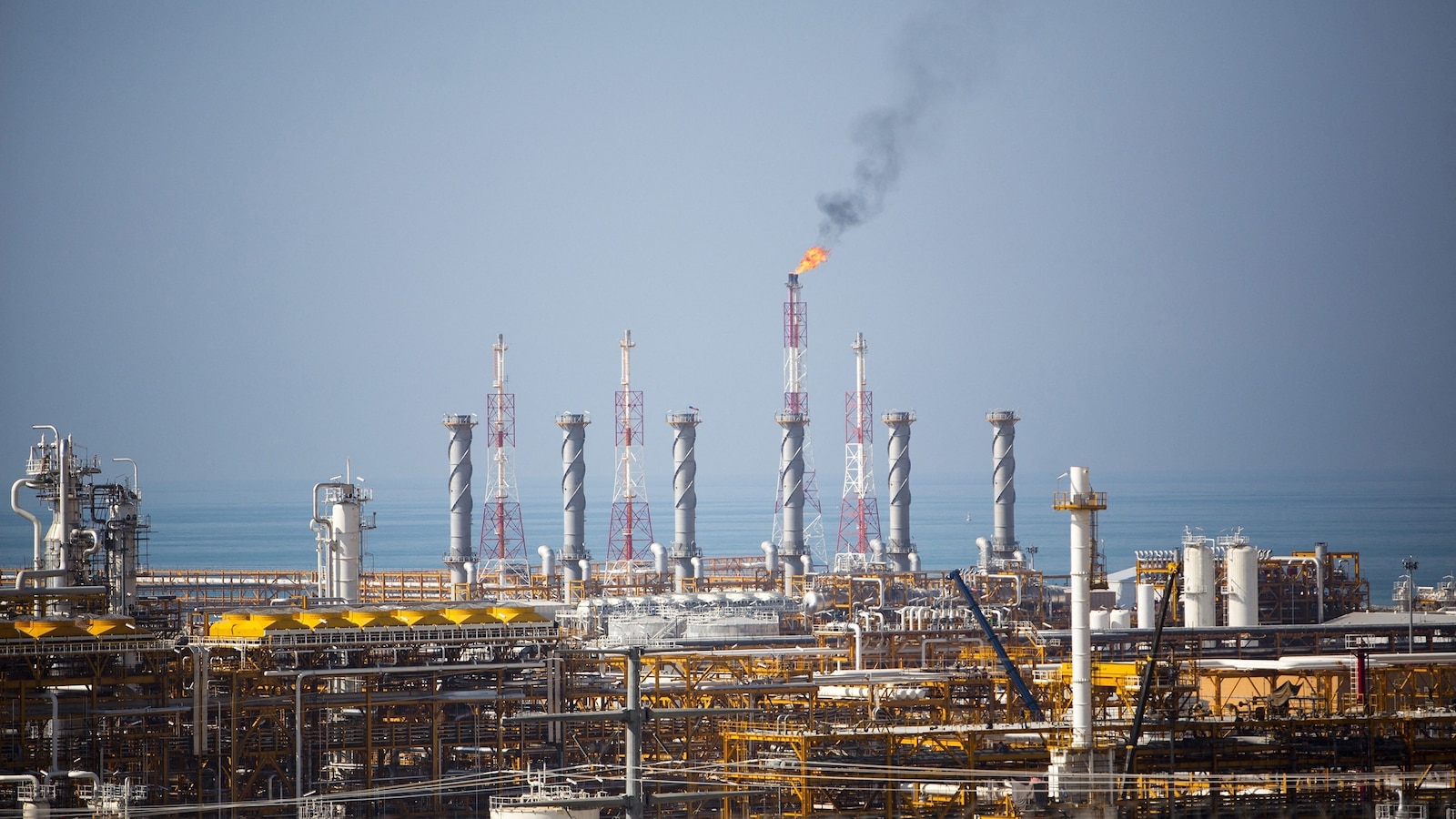
Unpacking the Colossus: Iran & Qatar's Shared Gas Giant – The South Pars/North Dome Gas-Condensate Field
In the depths of the Persian Gulf lies an energy behemoth unlike any other: the South Pars/North Dome Gas-Condensate Field. This colossal natural gas field, shared between the territorial waters of Iran and Qatar, is not merely large; it is, by far, the world's largest, holding a staggering proportion of the planet's recoverable natural gas reserves. Its ownership dynamics, immense resource potential, and significant geopolitical influence make it a constant focal point for energy markets, international relations, and regional stability. Understanding this gas giant is key to comprehending global energy security and the intricate political landscape of the Middle East.
A Colossus Beneath the Waves: Understanding the South Pars/North Dome Field
The South Pars/North Dome Gas-Condensate Field is an extraordinary natural gas accumulation, cementing its status as the world's biggest conventional hydrocarbon accumulation. Spanning an impressive area of 9,700 square kilometers (3,700 sq mi), its sheer scale dwarfs most other energy assets globally. This vast field is strategically situated, with 3,700 square kilometers (1,400 sq mi) falling within Iranian territorial waters, known locally as South Pars, and a larger portion of 6,000 square kilometers (2,300 sq mi) residing in Qatari waters, where it is referred to as North Dome. Interestingly, the "North" Dome lies geographically southwest of "South" Pars, a naming convention relative to each owning country.
The reserves held within this field are truly immense. According to estimations by the International Energy Agency (IEA), the South Pars/North Dome Gas-Condensate Field contains an estimated 1,800 trillion cubic feet (51 trillion cubic meters) of in-situ natural gas. Beyond its gas reserves, it also boasts approximately 50 billion barrels (7.9 billion cubic meters) of natural gas condensates, a highly valuable light crude oil often used to produce gasoline and other products. To put this into perspective, the field possesses almost as much recoverable reserves as all other natural gas fields worldwide combined. Its recoverable gas reserves alone are equivalent to an astounding 215 billion barrels of oil, complemented by about 16 billion barrels of recoverable condensate. This totals an estimated 230 billion barrels of oil equivalent recoverable hydrocarbons, making it a pivotal asset for global energy supply for decades to come. For more in-depth facts about its massive reserves, consider reading South Pars/North Dome: Exploring the World's Largest Gas Field.
The Uneven Race: Production Dynamics and Challenges
Despite sharing this monumental resource, the exploitation and production rates from the South Pars/North Dome Gas-Condensate Field have exhibited a stark imbalance between Iran and Qatar. Prior to 2026, Qatar's side, the North Dome, was a powerhouse, producing approximately 18.5 billion cubic feet (520 million cubic meters) of gas per day. This incredible output accounted for around 80% of Qatari government revenues, underscoring the field's critical role in the nation's economic prosperity and its significant influence on the global liquefied natural gas (LNG) market.
In stark contrast, daily production on the Iranian side, South Pars, was estimated to be significantly lower, around only 2 billion cubic feet (57 million cubic meters) per day. This vast disparity highlights deep-seated challenges faced by Iran in effectively harnessing its share of the joint field. A confluence of factors, primarily Western sanctions, economic isolation, and domestic mismanagement, have hindered Iran's ability to invest in the necessary advanced infrastructure, technology, and expertise required for optimal extraction. These obstacles have not only impacted production volumes but have also led to critical technical issues.
One particularly salient challenge is Iran's lagging efforts in pressurization on its side of the field. Gas fields naturally lose pressure over time, requiring re-injection of gas or water to maintain output. When one side of a shared field maintains higher pressure or extracts more aggressively, it can lead to gas migrating across the geological boundary to the side with lower pressure. This phenomenon means that, unfortunately for Iran, a portion of the gas originally situated on its side of the South Pars/North Dome Gas-Condensate Field may have effectively migrated into the Qatari North Dome, further exacerbating the production imbalance. This technical reality underscores the urgent need for coordinated development and investment, a challenge made difficult by geopolitical realities.
Geostrategic Nexus: Why This Field Matters Globally
The strategic importance of the South Pars/North Dome Gas-Condensate Field extends far beyond the economic well-being of Iran and Qatar. Its sheer scale and the global reliance on natural gas as a transition fuel and primary energy source endow it with profound geostrategic influence. The stability of production from this field directly impacts global energy prices, supply routes, and the energy security of numerous nations, particularly in Asia and Europe.
The field's critical role also makes it a focal point for geopolitical tensions. Hypothetical scenarios, such as the one described in the reference context from early 2026, where the Iranian side of the South Pars field reportedly faced an aerial attack, underscore the immense vulnerability of this critical infrastructure to regional conflicts. Such an event, even if hypothetical, paints a stark picture of the potential repercussions. The described damage, for instance, halting output at two refineries with a combined capacity of 100 million cubic meters per day and impacting nearly 12 percent of a nation's total gas production, illustrates the devastating cascade effect. This highlights the ongoing need for stability and de-escalation in a region where energy resources are deeply intertwined with political and security dynamics. Any disruption to this field could send shockwaves through international energy markets, affecting global trade, economies, and political alliances. To understand the broader implications, delve into Geostrategic Influence: South Pars/North Dome's Massive Gas Reserves.
Future Outlook and Collaborative Potential (or lack thereof)
Looking ahead, the long-term prospects of the South Pars/North Dome Gas-Condensate Field are inextricably linked to technological advancements, efficient management, and perhaps most critically, the geopolitical climate. While the field holds vast reserves, the challenges of extraction, particularly from an aging reservoir, will necessitate continuous investment in cutting-edge technologies for enhanced gas recovery and pressure maintenance.
For policymakers, energy analysts, and investors, understanding the complexities of this shared resource is paramount. Practical tips for navigating this landscape include:
- Monitoring Geopolitical Developments: The political relationship between Iran and Qatar, regional conflicts, and international sanctions policies directly impact the field's operational stability and development.
- Assessing Technological Gaps: Iran's need for advanced technologies and expertise presents both a challenge and a potential future opportunity, should political conditions allow for international collaboration.
- Understanding Market Dynamics: Qatar's continued expansion in LNG export capacity, driven by its North Dome output, significantly influences global gas prices and supply-demand balances.
Ideally, a collaborative approach between Iran and Qatar would unlock the full potential of the South Pars/North Dome Gas-Condensate Field, benefiting both nations through optimized extraction, shared infrastructure, and coordinated pressurization efforts. Such cooperation could mitigate gas migration and ensure the longevity and productivity of the field for mutual gain. However, the current political realities often make such extensive collaboration difficult, forcing each nation to pursue its development plans independently, often at suboptimal efficiency for the shared resource. The future will likely see continued efforts by both nations to maximize their respective outputs, while the world watches closely, recognizing the immense power and volatility embedded in this irreplaceable energy asset.
In conclusion, the South Pars/North Dome Gas-Condensate Field stands as a testament to the Earth's prodigious natural wealth and the intricate web of geopolitics that governs its exploitation. As the world's largest natural gas field, its shared ownership by Iran and Qatar, coupled with the stark disparities in production and the looming shadow of geopolitical risks, positions it as a critical player in global energy security. Its story is one of immense potential, challenging realities, and the ongoing delicate balance between national interest and international stability.