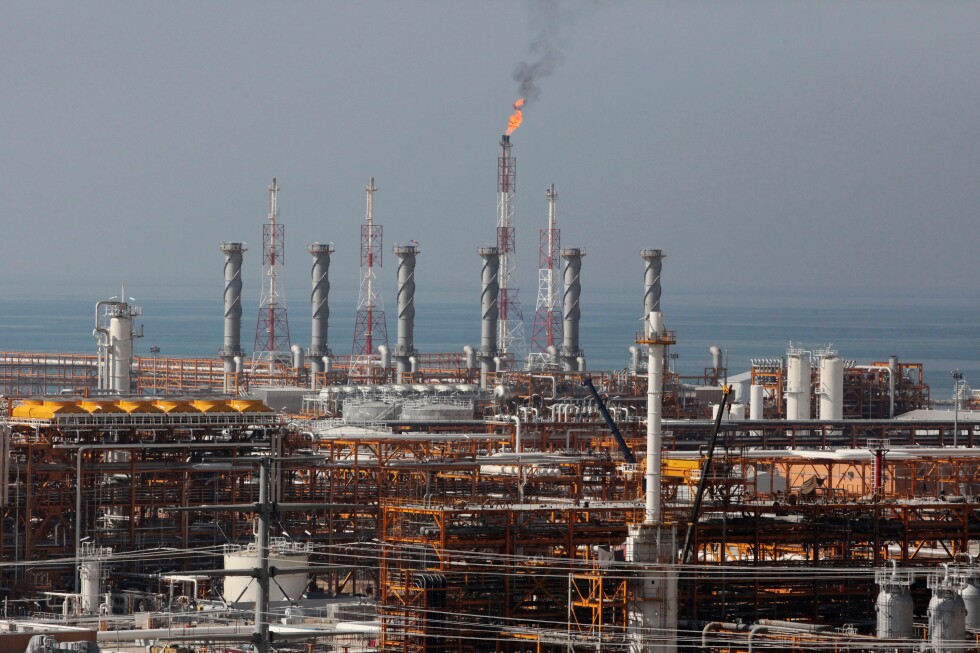
Nestled beneath the azure waters of the Persian Gulf lies an energy behemoth unlike any other: the South Pars/North Dome Gas-Condensate Field. This colossal natural gas reservoir is not just the largest on Earth; it represents a lynchpin in global energy security, a marvel of hydrocarbon accumulation, and a significant point of geopolitical interest. Shared between the territorial waters of Iran and Qatar, its sheer scale and strategic importance demand a deeper exploration.
Often referred to by its dual names—South Pars on the Iranian side and North Dome on the Qatari side—this field holds an astonishing volume of natural gas and condensates, influencing economies, international relations, and energy policies across the globe. Understanding its dimensions, the dynamics of its shared ownership, and the challenges surrounding its exploitation is crucial for anyone interested in the future of energy.
Unveiling the Colossus: Scale and Reserves of the World's Largest Gas Field
The numbers associated with the South Pars/North Dome Gas-Condensate Field are simply staggering. According to the authoritative figures from the International Energy Agency (IEA), this single field is home to an estimated 1,800 trillion cubic feet (51 trillion cubic metres) of in-situ natural gas. To put this into perspective, it holds nearly as much recoverable natural gas as all other known fields combined, cementing its status as the undisputed global leader.
Beyond natural gas, the field also boasts immense reserves of natural gas condensates—a valuable light crude oil often extracted alongside gas. Estimates place these condensate reserves at approximately 50 billion barrels (7.9 billion cubic metres). When considering total recoverable hydrocarbons, the field's gas reserves alone are equivalent to an astonishing 215 billion barrels (34.2 billion cubic metres) of oil, complemented by about 16 billion barrels (2.5 billion cubic metres) of recoverable condensate. This brings the total recoverable hydrocarbons to an astounding 230 billion barrels (37 billion cubic metres) of oil equivalent, making it the world's biggest conventional hydrocarbon accumulation.
Spanning an expansive area of 9,700 square kilometres (3,700 sq mi), the field's immense footprint underscores its unparalleled scale. For context, while the South Pars/North Dome Gas-Condensate Field reigns supreme, other significant fields like Russia's Urengoy gas field, though vast, stand a distant second. This field is not just large; it redefines the very concept of an energy giant.
A Shared Giant: Ownership and Geographical Divisions
The unique geopolitical arrangement surrounding the South Pars/North Dome Gas-Condensate Field is central to its story. Ownership is distinctly divided between two prominent Persian Gulf nations: Iran and Qatar. This shared custody makes it a fascinating case study in international resource management, often necessitating complex negotiations and sometimes leading to disparate development trajectories.
The field's total area of 9,700 square kilometres is split according to territorial waters. The Iranian portion, known as South Pars, encompasses approximately 3,700 square kilometres (1,400 sq mi). Across the maritime border, the Qatari section, dubbed North Dome, covers a larger expanse of roughly 6,000 square kilometres (2,300 sq mi). Interestingly, despite their names, the "North" Dome lies geographically to the southwest of "South" Pars, a detail relative to each country's perspective. For a more detailed look into the nuances of this dual ownership and its implications, readers can explore our in-depth analysis on Iran & Qatar's Gas Giant: Unpacking South Pars/North Dome Ownership.
This division means both nations have a vested interest in the field's sustainable extraction and management, yet their approaches and capabilities have historically varied significantly, impacting their respective economic outputs and strategic positions.
Geostrategic Implications and Production Dynamics
The immense reserves of the South Pars/North Dome Gas-Condensate Field bestow upon it profound geostrategic influence. Its sheer capacity to fuel global energy demands places both Iran and Qatar at critical junctures in international energy politics. However, the exploitation of this shared resource has seen markedly different trajectories between the two co-owners.
Reports from early 2026 highlighted a stark disparity in production levels. At that time, Qatar was achieving an impressive daily output of approximately 18.5 billion cubic feet (520 million cubic metres) from the North Dome. This monumental production accounted for a staggering 80% of Qatari government revenues, underscoring the field's central role in the nation's economic prosperity. In stark contrast, daily production on the Iranian side (South Pars) was estimated to be significantly lower, around only 2 billion cubic feet (57 million cubic metres).
This considerable gap is often attributed to a confluence of factors affecting Iran, primarily Western sanctions, which have historically limited access to crucial technology, foreign investment, and expertise. Isolation and perceived mismanagement have also played a role. A critical consequence of these challenges has been Iran's lagging efforts in maintaining reservoir pressure on its side of the field. This technical deficiency can lead to gas migrating across the geological boundary, effectively allowing more gas to flow towards and be captured by the Qatari side, exacerbating the production imbalance. Understanding the broader geopolitical ramifications of such a vital energy asset is essential; delve deeper into its impact by reading Geostrategic Influence: South Pars/North Dome's Massive Gas Reserves.
Moreover, the vulnerability of such critical energy infrastructure was tragically highlighted by an incident on March 18, 2026. Reports indicated an attack on sections of the South Pars gas field, causing significant damage that reportedly affected nearly 12 percent of Iran's total gas production. The Iranian Ministry of Petroleum confirmed facility damage and a fire, halting output at two refineries with a combined capacity of 100 million cubic metres. Such events underscore the inherent risks and geopolitical tensions surrounding this globally vital resource, influencing regional stability and international energy markets.
Navigating Challenges and Forging the Future for the Gas Giant
The future of the South Pars/North Dome Gas-Condensate Field, despite its colossal reserves, is not without its challenges. For Iran, overcoming the hurdles of sanctions and ensuring sustained investment in advanced extraction and processing technologies remain paramount. Practical advice suggests that international collaboration, where feasible, could significantly enhance efficiency and reduce environmental impact. Pressurization efforts, for instance, are vital for maximizing recovery and preventing gas migration, requiring substantial technological input and capital.
Beyond the immediate challenges, both nations must consider long-term strategic planning. This includes diversifying energy markets, investing in liquefied natural gas (LNG) infrastructure to reach global consumers, and adopting best practices for environmental stewardship. The sheer volume of gas necessitates a focus on minimizing methane emissions and managing condensate by-products responsibly. Furthermore, the immense scale of this field offers a unique opportunity for both countries to lead in carbon capture and storage (CCS) technologies, turning a challenge into an innovative solution for cleaner energy production.
The ongoing development and protection of such a critical energy asset demand continuous foresight, technological advancement, and a stable geopolitical environment. Effective international diplomacy is paramount to ensure that this shared natural marvel benefits all stakeholders responsibly and sustainably, navigating potential conflicts and fostering cooperation.
In conclusion, the South Pars/North Dome Gas-Condensate Field stands as a monumental testament to the Earth's natural wealth and a critical pillar of global energy. Its unparalleled reserves, shared ownership, and significant geostrategic implications make it a perpetual focal point in the international energy landscape. As the world transitions towards cleaner energy, the effective and responsible management of this gas giant will continue to shape global markets, influence regional stability, and define the energy security narratives for decades to come.